Question:
Can I stop my dog from guarding their food and toys?
Answer:
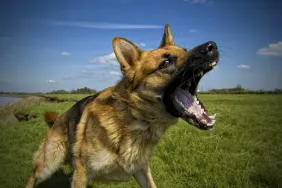
Yes. But first, for your safety, a quick snapshot of what guarding looks like: Dogs with food or toy aggression often display stiffened body postures when a person or animal approaches their food or valued possession. Many dogs will also growl or snarl. Some will even snap or bite. It’s important to gauge body language before approaching any dog who is eating or chewing.
A behaviorist can help determine whether your dog’s guarding is a major or minor problem by asking about their behavior in other situations. Does your dog also show signs of aggression when moved off of her favorite resting spot? Or when petted? A specialist will ask about the frequency and severity of the behavior as well, and thus assess risks to your family.
How to reduce dog guarding behavior
Treatment begins with developing a safety plan to reduce the chances that your dog will behave aggressively. Please note that there is no way to completely eliminate that risk. With effort, you can drastically reduce the risk. However, most behavior problems are “successfully managed” over the long term rather than “cured.” The safety plan may include steps that are as simple as putting your dog outside (or behind a closed door) when she eats her dinner or chews on her favorite toy.
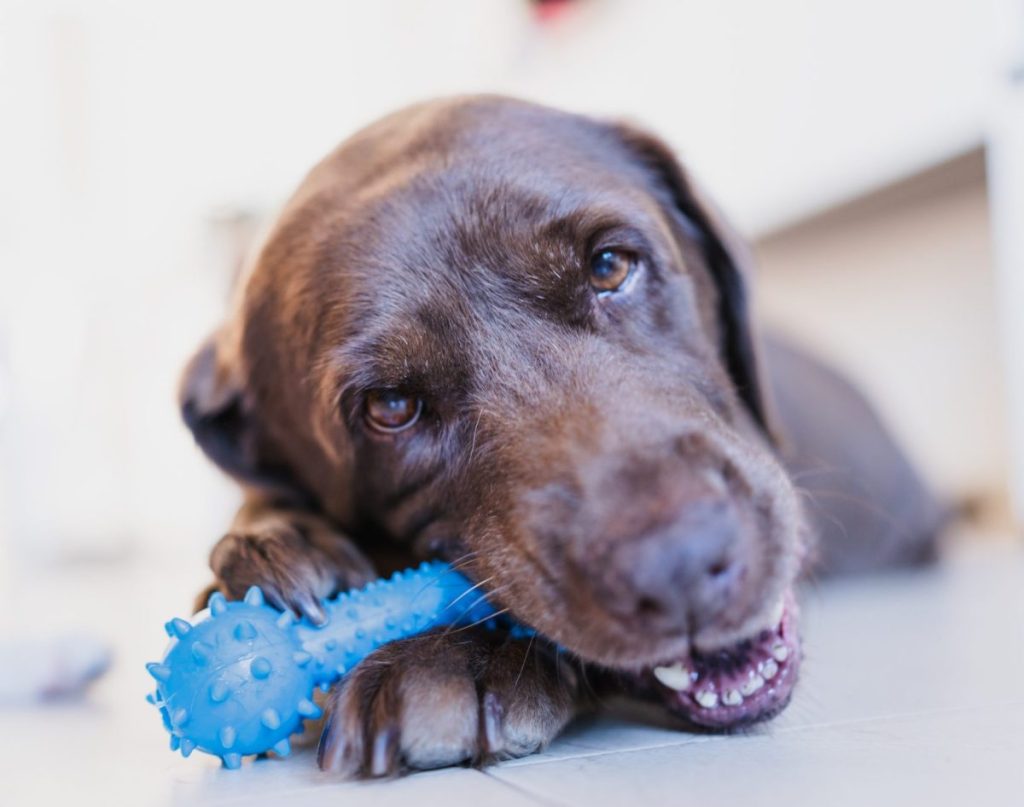
With some dogs, you can resolve this problem by reducing the value of the item. For example, if your dog guards Nylabone chew toys and attacks anyone who goes near them, you may be able to solve the problem by providing your dog with an abundant supply. Place 10 Nylabone toys around the house, as this makes the toy less valuable. If there is a greater supply, there will potentially be less demand. (Know that this is not a surefire solution; some dogs will collect and protect all 10 toys.)
For the dog that does not respond to the law of supply and demand, or for more serious cases, the solution is to teach the dog that they do not gain anything by their unacceptable behavior. There are several techniques that can help reduce the stress and anxiety related to the item. Eventually, the dog will learn to share valuable items rather than behave aggressively around them. This type of treatment is most likely to be successful under the guidance of a professional behaviorist.