It’s true that canines communicate very differently from humans, and marking (or intentional urination) may be the most blatant example. Though it looks (and smells) identical, marking is not at all the same thing as elimination. If your dog has an accident indoors because they simply can’t hold it or because they’re still working on housetraining, they’re communicating nothing more than that they need to relieve themself. Marking, on the other hand, can mean anything from, “Hey, you’re standing on my property,” to “My rank is higher than your rank,” to “Wanna mate?”
If your dog is housetrained and you suddenly notice little puddles around your home, consult your veterinarian to make sure this is a behavioral issue and not a medical problem.
Causes of dog marking
Most often, marking is an instinctual behavior. It’s more common in males than females, and almost always involves urination. (Dogs rarely mark with feces.) Your dog uses this tactic to say, “This is my turf.” The trigger can be anything from the arrival of a baby to the acquisition of a new vacuum cleaner. Sometimes, simply noticing a squirrel zip through the backyard is enough to prompt marking behavior. While excitement or fear can also stimulate your dog to deliberately urinate, the most common explanation is that they’re just identifying their territory.
How to treat the problem
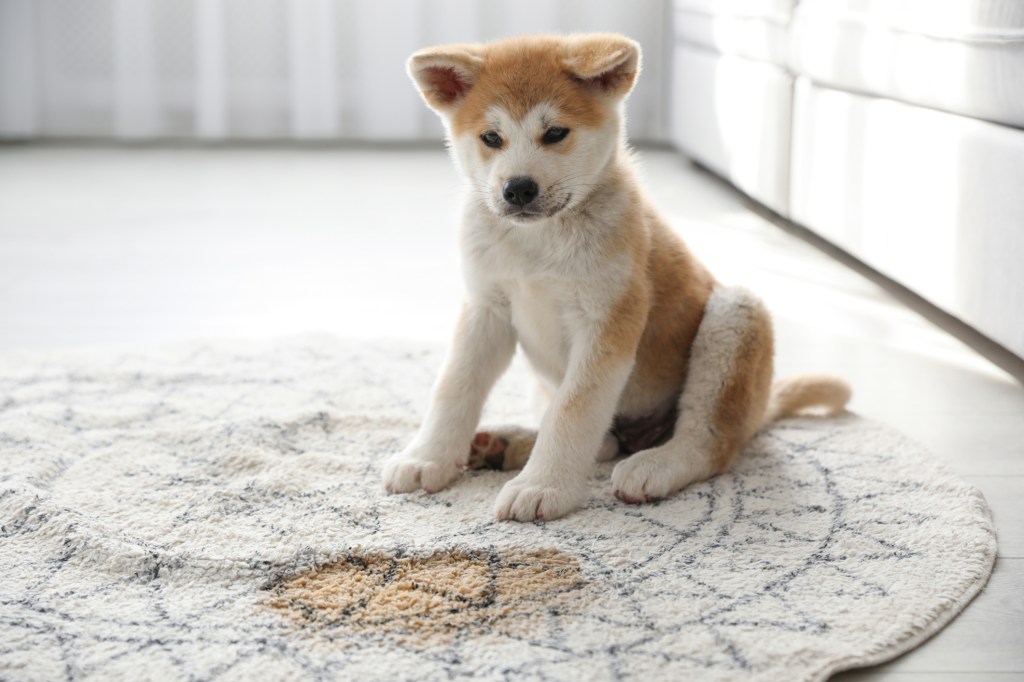
Territorial marking
- Spay or neuter your dog, preferably before they reach sexual maturity. In some breeds, that’s as early as 6 months. This reduces their compulsion to mark and can prevent the habit from forming in the first place.
- Establish yourself as a strong, benevolent leader so that your dog knows to look to you for guidance. You can reinforce your benevolent leadership status by asking your dog to earn every privilege or treat. For example, before you toss them that tennis ball or feed them dinner, ask them for a specific behavior (such as “sit“).
- Because marking often occurs as a response to a perceived threat, ensure that your dog is comfortable in your home. If you’re bringing a new person (or animal) into the household, make certain that all those initial interactions are positive. Introduce another pet gradually and provide plenty of treats when the new baby’s around.
- If there’s a particular area where your dog is given to marking, change their association with that spot by playing their favorite game there or “hiding” treats in and around the area.
- Don’t let your dog roam freely inside the house. Put them in a crate or another small, safe space when you aren’t able to monitor them.
- If you catch your dog in the act of marking, immediately interrupt them and lead them outside. Don’t scold; this will make the problem worse.
Excited or submissive urination
- If you suspect your pup is urinating simply because they’re excited to see you at the end of each day, keep greetings and reunions low-key. Ask visitors (or anyone who triggers an excited response in your dog) to do the same. This behavior is common in puppies, and they usually outgrow it as they develop better bladder control.
- Submissive urination is your dog’s way of letting the other guy know they’re not a threat. Help build your dog’s confidence through training and praise.
- Avoid sending any message that the pup could perceive as intimidating (for example, direct eye contact or a pat on the head).
How to prevent the problem
All of these techniques will help prevent marking behavior as well as treat it. Start when your dog is a puppy: spay or neuter them as early as possible. Make sure that they’re completely housetrained and know where it is — and isn’t — appropriate to urinate. Pair the arrival of unfamiliar people, animals, and objects with treats and praise to create positive associations with new things.
Marking is instinctual in canines and is primarily used to communicate ownership or assertiveness. The best way to curb the behavior is to ensure that your dog is properly housetrained and feels safe and comfortable in their home.