Do you want a dog who’s friendly and trustworthy around both people and other dogs? You might think all you need to do is adopt the right breed, and your job is done. But how you care for your canine — and socialization training in particular — plays a big role in how they respond to people and other pooches, especially if you’ve adopted a puppy.
There’s a short period in a puppy’s development, from very early puppyhood to three or four months of age, when their experiences have a big effect on their entire approach to life.
If they have lots of positive encounters with other dogs, all kinds of humans, and new situations during that developmental window, they’re far more likely to grow up to be a confident, relaxed, and friendly dog.
Trainers call this process socialization, and it’s one of the most important things you can do for your puppy’s well-being for the rest of their life. Here’s what you should know about socialization for puppies.
What Happens If You Don’t Socialize Your Puppy?
Puppies who aren’t socialized can grow up to be fearful of other dogs, people, and just about anyone and anything outside of their routine — and that fear can lead to aggression. Studies show that poor socialization is a major factor for dogs with aggressive tendencies.
Although puppyhood is the prime time for socialization, it’s not the only time. Even a dog who had a hopping social life in their youth can become less friendly over time if they’re isolated during adulthood.
If your adult dog didn’t get enough socialization growing up, you may still improve their social skills; although, an adult’s personality is more fixed than a puppy’s.
You’ll have to move slowly and cautiously, and if you see signs of aggression or extreme timidity, get help from a professional trainer or behaviorist right away.
How Can You Use Socialization To Raise A Friendly Dog?
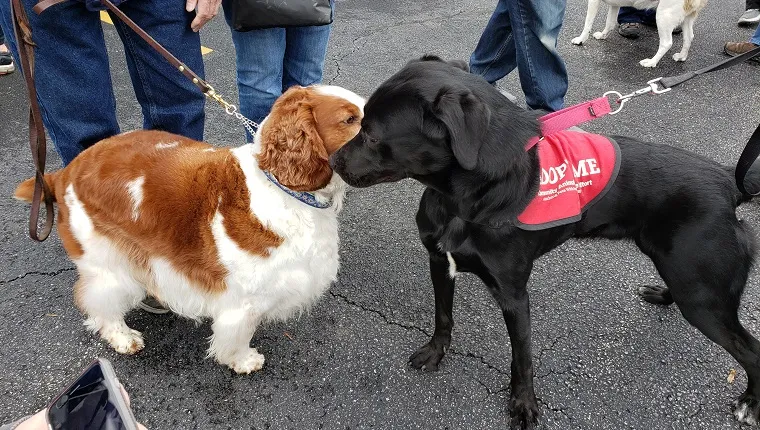
If you’re considering adopting a puppy, socialization should begin almost immediately after you bring them home.
Ask your shelter or rescue for tips on how to start the process. You may also wish to get some recommendations for doggy daycare and obedience classes that will let your pup learn and meet with other people and dogs.
Here are a few tips for starting the socialization process with your puppy.
Puppies Should Learn From Mom
Sometimes when we adopt, we don’t really have a say in how long a dog can spend time with their biological family. But if you have the option, don’t take a puppy away from their mother and littermates before eight weeks of age.
Interactions with their moms and siblings teach young puppies a lot about getting along with other dogs. If you take your puppy away from their canine family too early, you may do permanent damage to their social skills.
Meet New Dogs
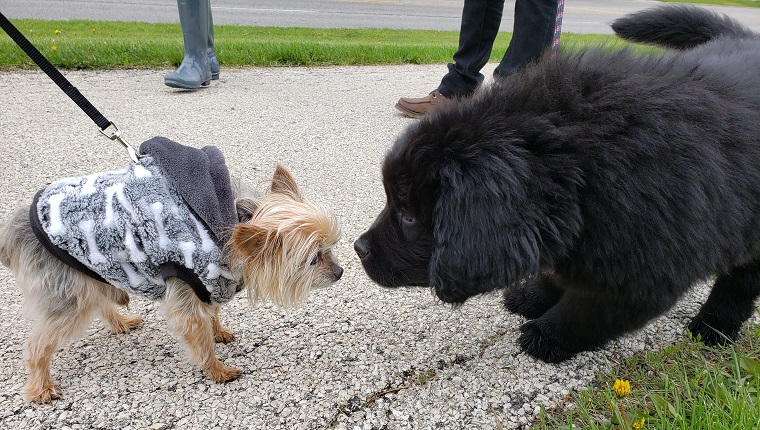
Give your dog plenty of positive early experiences with other dogs.
Obedience classes, dog park romps, and playdates with your friends’ dogs will help your pup learn how to get along with other canines.
If you have shelter-in-place orders or the dog parks and canine classes near you have closed down, consider fostering an older, more relaxed dog who has more experience. They may provide your puppy with some companionship, but always make sure the dogs meet first and get along.
For puppies, playing with other pups has another, even more important, benefit: it teaches them not to bite humans.
Meet New People
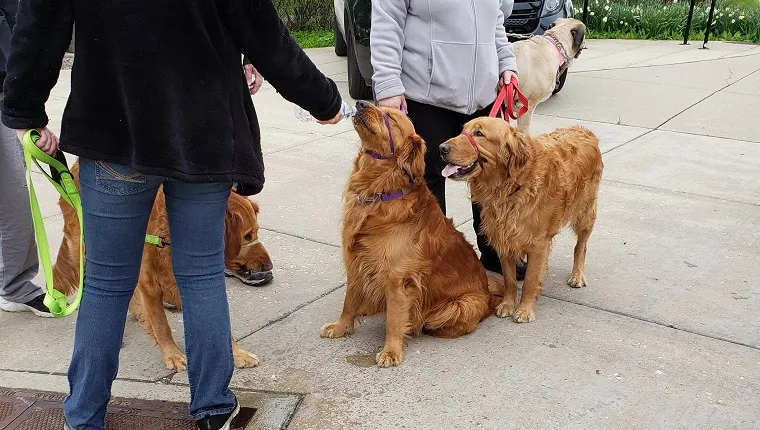
Give your dog plenty of happy experiences with all kinds of people.
If you can, have your dog meet big kids, little kids, running-skipping-yelling kids, tall men in boots, women in hats, and people of every shape, color, and size. If your dog gets regular exposure to humans of all stripes, especially in puppyhood, they’re less likely to be fearful or aggressive.
Experts recommend throwing “puppy parties” to expose a young pup to lots of different people when they’re learning how to behave around humans. You can also have your dog make friends with the mail carrier and your neighbors, and take them to cafes or to work.
Again, if meeting new people is difficult or unsafe at this time, you may have to get creative. However, this may be a good time to introduce your pup to people wearing gloves and face masks.
It may be hard to socialize during a pandemic or any other situation where there are new dangers. But be responsible and keep up with social distancing when possible while still training your dog.
Make Your Dog A Part Of The Family
Almost all dogs want to be a part of their “pack.” You and your family are that pack, so include your dog in as many activities as possible.
It should go without saying, but let your dog live indoors. There are no good “outdoor” dogs. A dog who lives in the home with their human pack all around them will be more comfortable with people and the bustle of the household, and they’ll be much happier, too.
Expose Them To New Situations
Expose your dog to all kinds of noises and experiences. Skateboards, bicycles, lawn mowers, vacuum cleaners, dishwashers, and the like can frighten a dog who’s not used to them.
Nail trimming, being grabbed by the collar, getting touched on the rump or other potential “hot spots,” and having people around their food bowl won’t get a warm response either.
The solution is to expose your dog to all these experiences, ideally during puppyhood.
If you have an adult dog, be sure to move slowly and keep the mood positive with food treats to reward them at each step. This works for puppies, too.
Teaching your pup to be dog- and people-friendly is possibly your most important job as a dog parent. It keeps people safe around your dog, and — since aggressive dogs often get put down — it keeps your dog safe around people.
Give your pup regular exposure to dogs and all kinds of people, especially during puppyhood, and you’re more likely to have a confident, sociable dog.
Do you do any socialization training with your dog? How do you make sure your pooch stays friendly? Let us know in the comments below!
Click the bold links in the article to shop for your dog and support our content!