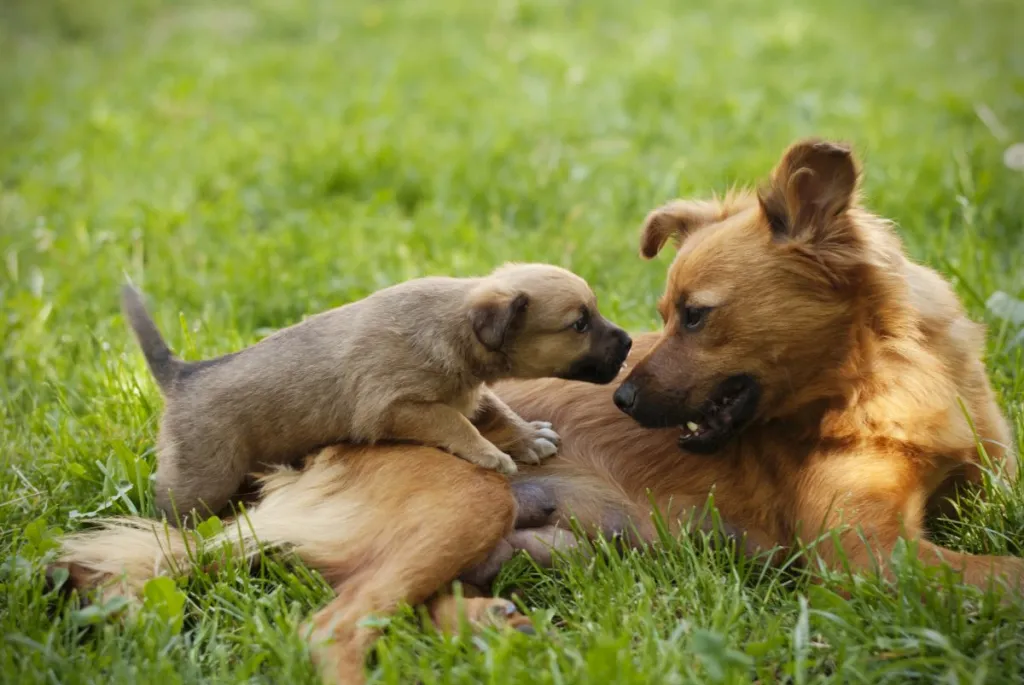
There’s a short period in every puppy’s development, from very early puppyhood to 3 or 4 months of age, when their experiences have a big effect on their entire approach to life. If a puppy has lots of positive encounters with other dogs during that developmental window, they are far more likely to grow up to be dog-friendly. If they don’t, they can become fearful of, and even aggressive toward, other dogs. So how do you raise a dog-friendly dog? We have some tips.
An adult dog’s personality is far less malleable than a puppy’s, but exposure to other dogs can still improve their social skills. Just move slowly and cautiously, and if you see signs of aggression or timidity, get help from a professional trainer or behaviorist right away.
How to raise a dog-friendly puppy
Puppyhood is the easiest time to lay the foundation for a dog-friendly dog, since other canine companions — starting with your puppy’s mother and littermates — do most of the work.
Young puppies teach each other how to act around other dogs, mainly by practicing how to show and read the signs of submission and dominance. Without this lesson in canine etiquette, a dog may attack another dog who’s trying to tell them, “I give up! You’re the boss!” Or, they won’t know how to defuse a dominant dog’s aggression by signaling submission. So, make sure you give your puppy plenty of chances to practice his canine etiquette.
Here are some other tips for raising a dog-friendly dog:
Bring home your puppy at the right age
Don’t adopt a puppy who was taken away from their mom and littermates before 8 weeks of age. Any earlier, and your pup won’t have had enough chances to practice their canine manners with them.
Set up playdates
When you bring your new pup home, invite your friends to bring their healthy, vaccinated dogs over to play. To make sure your pup doesn’t get intimidated, start with mellow, well-behaved dogs.
Enroll in classes
As soon as possible, sign up for puppy kindergarten classes that allow the pups plenty of time for off-leash play.
Feed their social life
When your puppy grows up, take him to the dog park, invite friends’ dogs over to play, and keep exposing your dog to other canines. Even if your dog had a hopping canine social life during puppyhood, they need regular exposure to other dogs throughout adulthood or they risk becoming less friendly over time.
All puppies should get regular playtime with canine pals to be friendly and safe around other dogs. This is especially important before the age of 3 or 4 months, when a pup’s experiences can shape their personality as an adult.
Now that you know all about raising a dog-friendly puppy, check out the most dog-friendly dog breeds!