New pet parents often have a lot of questions when it comes to crate training their dogs. It’s important for a lot of reasons. A crate can keep your dog safe while you’re away, reduce destructive behaviors, and help with housetraining, among other things.
Some people worry that crate confinement is cruel. However, if you do it right, your dog won’t see it that way at all. Their crate can be a cozy den where they retreat from household chaos or just relax. It’s like their own personal bedroom.
And once they’re housetrained, your dog will have the run of the house as well as a nice little den of their own. Just remember to leave the door open for them.
How can crate training help
Crates make particularly good tools for two important training tasks: housetraining, and reducing both boredom and separation anxiety.
Crates make housetraining easier. Because dogs don’t like to pee or poop where they sleep and eat, they’ll likely feel more motivated to hold it when they’re in their crate.
Pop your dog in their crate whenever you’re not with them, and they won’t have any accidents around the house. This prevents a bad habit from forming.
Take them out for bathroom breaks regularly, and they’re more likely to eliminate outdoors. This helps them learn good habits.
Crates also help prevent boredom and separation anxiety.
If you stock their crate with toys, especially chew toys stuffed with a few treats or xylitol-free peanut butter, they’ll learn two more good habits: chewing on their toys rather than your favorite shoes, and settling down to entertain themselves when you’re not around.
How to choose a crate
If your dog’s crate is too big, they may feel that they can eliminate at one end and still keep their living area clean. If it’s too small, they’ll feel cramped.
The ideal crate size is just big enough for your dog to stand up, turn around, and lie down comfortably. It should be just long enough so that their nose and rear end don’t touch each end of the crate.
If you’ve got a puppy but don’t want to buy new crates as they grow, you can block off part of an adult-sized crate to keep them on one side of it. Some crates come with dividers just for this purpose.
Most crates are made of either collapsible wire or solid plastic, each of which has its pros and cons.
Wire crates let your dog keep an eye on what’s going on around them. They’re good for a dog who’s prone to feeling lonely, and they’re usually cheaper.
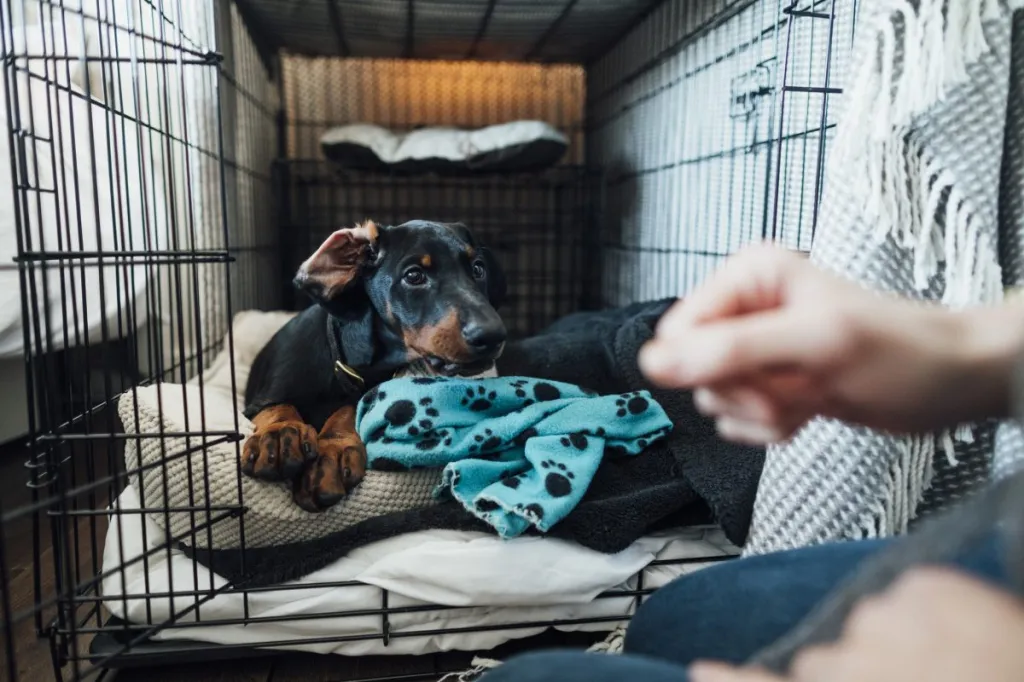
Solid plastic crates can do double duty on plane or car trips, and they have a more den-like atmosphere, which an easily overstimulated dog may prefer. However, you can make a wire crate cozier by draping a blanket over the top and sides, leaving the door uncovered.
How to make the crate feel like home
Lining the crate with bedding makes it cozier, but some dogs may see the bedding as toilet or chewing material. If that happens, remove the bedding for a while. Never line the crate with shredded newspaper — it’s too tempting for your dog to use it as a toilet.
Bumper pads for the sides, like those you’d use for a baby’s crib, can make the crate more comfortable and prevent trapped paws, tooth damage from gnawing on metal, snagged collars, and other injuries.
A hot water bottle wrapped in a towel at night can comfort a new puppy, replacing the warmth of sleeping with littermates.
Finally, if the crate slides around on the floor, put a towel underneath it to give it more grip.
Put the crate somewhere that gets a lot of foot traffic — perhaps the kitchen or family room — to keep your dog from feeling isolated. This will help acclimate them to the noise and bustle of your household.
You can also get a portable crate that you take with you as you move around the house.
How to get a puppy used to the crate
If you’ve got a puppy, it’s fairly easy to teach them that the crate is a happy place.
Usually, all it takes is stuffing a chew toy with treats. Let your pup sniff it, and put it in the crate. Your puppy will most likely follow.
Or put a few snacks just outside the door, then just inside, then all the way in the back of the crate, and your pup will follow the treat trail right in.
Teach them to associate the crate with good things, like treats. Allow them to explore the crate with the door open while you’re there to supervise. Do not use the crate as a punishment, or else your puppy may learn to fear the crate.
How to get an adult dog used to the crate
Adult dogs who’ve never been crate trained need more time and effort to get used to their new den.
As soon as you bring your dog home, feed them all their meals inside the crate. If they won’t go all the way in, put the bowl just inside, so they’ll at least poke their head in. At the next meal, you can put the bowl a little further inside the crate; the next meal even further, and so on.
In addition, give your dog chew toys and chew bones only when they’re in their crate.
Practice going in and out of the crate. Tell your dog in a cheerful tone of voice, “Go to your crate,” and toss a treat inside. Leave the door open, and let them fetch the treat.
Do this a few times, and once they’re happily going in and out, close the door with them inside for a minute or two. As long as they’re resting inside calmly, praise them and offer an occasional treat.
Gradually lengthen the amount of time your dog spends in the crate with the door closed, but stay in the room. Then begin to leave the room for short periods, which you can slowly stretch out.
This process can take several days. Go slowly and proceed to the next step only if your dog seems happy being in the crate.
To keep your dog feeling positive about spending time in their crate, don’t ever put them in it as a punishment, and give them plenty of breaks for bathroom trips, walks, and time to play and bond with you.
A crate is a training tool, not a place to stick your dog and forget about them. If a dog spends your entire workday in their crate and sleeps there at night, they’re spending too much time confined to a small space.
What to do if your dog whines and cries
It’s common for dogs to protest when they’re getting used to the crate. Usually, they just want out, in which case you should ignore them. Otherwise, you’re teaching your dog that whining will get them what they want.
Wait until your dog quiets down before letting them out, and then try again later with a shorter period of confinement.
However, it’s also possible that your dog needs a bathroom break. If you suspect that’s the case, take them outside, but make it all business: no playing or romping. If they don’t eliminate within a minute or two, they go back inside.
A dog who truly panics inside the crate could hurt themself in their attempts to get out. In that case, the crate is not serving its purpose as a place where your dog can feel — and be — safe and secure.
Explore other methods of housetraining, and consider whether this dog simply doesn’t need a crate to be reliable alone inside the house.
Crate training is the easiest way to housetrain dogs, and it also teaches them how to settle down and entertain themselves when you leave. However, crates won’t work if you use them to punish a dog or keep them “out of sight, out of mind.”
Use the crate only when necessary, give your dog plenty of breaks to stretch their legs and to play and bond with you, and make crate time more pleasant by stocking it with toys.