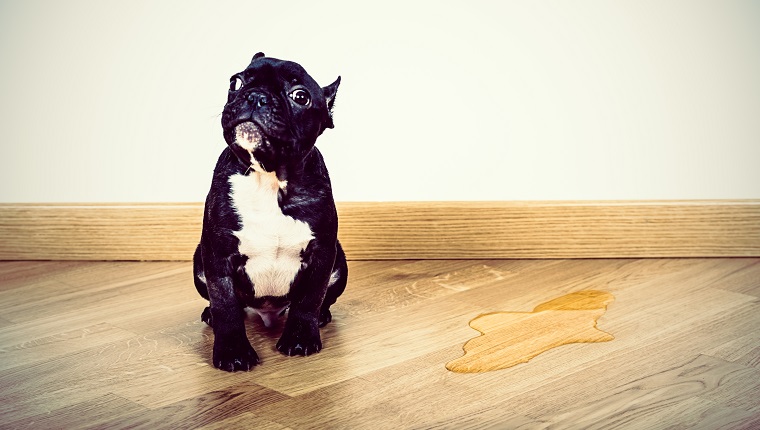
Urinary incontinence happens when a dog loses control of their bladder, even though they’re usually housetrained and able to wait until they can find an appropriate place to urinate.
Some dog parents believe that incontinence is a natural result of aging, and they delay taking their dogs to the veterinarian. While many dogs do develop age-related problems, there are many other causes to consider, too.
Urinary incontinence is often easily treated, and the medications are not expensive. So the sooner you get your dog to the vet, the better.
While your dog receives treatment, you may want to purchase a doggy diaper or belly band to prevent accidents from causing a mess in the home. You can find reliable, washable belly bands for male dogs here and doggy diapers for female dogs here.
Here are a few things you should know about urinary incontinence in dogs.
Causes Of Incontinence In Dogs
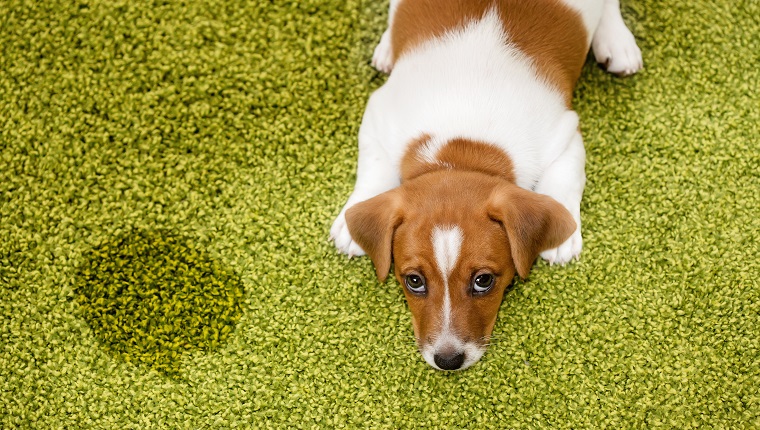
Before you jump to conclusions, first make sure that your dog is indeed suffering from incontinence.
A dog who feels frightened or threatened may urinate. This is called submissive urination and it mainly affects young dogs. It’s normally something they outgrow.
An unaltered (not neutered) male dog will mark his territory, or a dog may simply need more housetraining.
Sometimes age plays a part. For example, an older dog may suffer from canine cognitive dysfunction and simply forget their housetraining.
If all of these causes are ruled out, your dog will likely be diagnosed with urinary incontinence.
The first thing your vet will do is perform a urinalysis and urine culture. The urinalysis finds certain cell types and biochemical elements in the dog’s urine, while the culture grows the bacteria in the urine for identification purposes and to test different antibiotics to see which one would most effectively fight that particular strain.
Most canine incontinence is caused by:
- A urinary tract infection (usually a bladder infection)
- A weak bladder sphincter (common in aging female dogs)
- Excessive water consumption
- Spinal cord disease
Bladder Infection
A bladder infection is a common cause of urinary incontinence in young adult female dogs, and vets generally diagnose it with a urine culture; although, signs of the infection will usually show up in the urinalysis.
In this case, the urine culture will confirm the diagnosis, identify the infecting bacteria, and list the antibiotics that will effectively clear the infection.
There are usually several choices of antibiotics, and your vet will choose the one most suited to your dog.
Dogs usually take one to three weeks of medication, after which they should have a second culture done to ensure that the infection is truly cleared up.
Incontinence caused by a bladder infection will sometimes show improvement only a few days after treatment begins, but it’s important to finish the entire regimen to avoid a recurrence.
Weak Bladder Sphincter
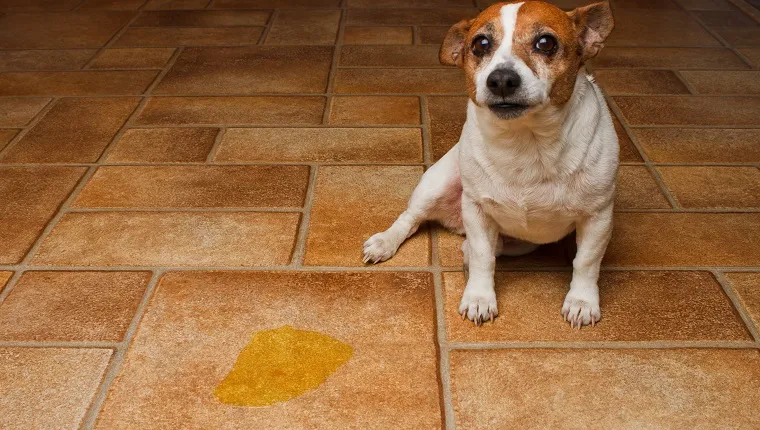
Several factors, such as aging, obesity, and reduced sensitivity of receptors in the sphincter, can contribute to urinary incontinence in dogs.
It’s a common problem in older female dogs, with one in five dogs affected. This is also sometimes called spay incontinence and is believed to be caused by low estrogen levels.
Once a vet rules out other conditions, they may treat the weak sphincter using one of several medications.
- Estrogens. Estrogens help maintain neuroreceptors in the bladder sphincter. With no or low estrogens, a common problem in spayed females, receptors ignore the message to store urine, and it leaks out, often during sleep. DES (diethylstilbestrol), is the most common estrogen for dogs. Although DES is not safe for humans, the low dosage for dogs is considered safe. The medication has to be ordered through a pharmacy. The normal dose is 1mg once a day for five days and then once every four to seven days after. Male dogs respond better to testosterones, but dogs must be watched for aggression, which is sometimes a side effect.
- Alpha-Adrenergic Agonists. These medications increase the pressure of the bladder neck and help hold urine in the bladder. The most common medication for canine use is phenylpropanolamine, which comes in pill or liquid form. Side effects of the medication can include irritability, loss of appetite, anxiety, and blood pressure changes. Most dogs have few problems with side effects.
Your vet may prescribe a combination of estrogens and alpha-adrenergic agonists in particularly resistant cases.
- Anticholinergics. Anticholinergic drugs relax the muscles of the bladder, facilitating urine storage. Vets can use a human anti-anxiety drug, Imipramine, which has anticholinergic properties, in combination with phenylpropanolamine to treat canine incontinence, but they only use it in cases that don’t respond to traditional therapies.
Excessive Water Consumption
Some dogs consume such large quantities of water that their bladders simply cannot hold it all. Some pet parents are aware that their dogs are drinking a lot of water, but most are surprised when the urinalysis shows that the dog has diluted urine.
A vet can easily detect the problem through a measurement called “specific gravity.” This compares the amount of dissolved biochemicals in the dog’s urine to pure water, which contains none.
A urine specific gravity approximately equal to water confirms excessive water consumption. Your vet will probably order blood tests to determine if your dog has an underlying disease that would cause them to drink excessively.
Some causes of excessive water consumption include:
- Diabetes mellitus
- Cushing’s disease
- Bladder infection
- Diabetes insipidus
- Kidney failure
There are other less common causes, but a blood panel and urine culture will disclose the presence or prove the absence of 90 percent of them.
Unusual Causes Of Incontinence
The list of causes above has just scratched the surface of incontinence.
Some of the less common causes include:
- Spinal damage, usually in the lower lumbar region
- An infection located high in the urinary tract, usually of the kidneys or ureter
- An ectopic ureter, which is an abnormally placed ending of the ureter. Instead of ending in the bladder, it drains into the urethra, the vagina, or the uterus, and the dog constantly dribbles urine. A vet can easily correct it with surgery.
Surgical Treatment For Urinary Incontinence In Dogs
Treatment for urinary incontinence in dogs often depends on the underlying causes.
Most cases can be handled with medication, lifestyle changes, or simple treatments that strengthen the bladder or correct issues that are causing incontinence.
Sometimes, however, these treatments fail to address the problem, and surgical options are necessary.
Your vet can answer any questions you may have about the best treatment for your dog. Do not try to medicate your dog with consulting your vet.
Here are a few other treatments your vet may use to treat urinary incontinence in your dog:
Colposuspension
Colposuspension is a surgical procedure that repositions the bladder neck of female dogs in the intra-abdominal cavity so that pressure from the wall muscles act simultaneously on both the bladder and the urethra. Thus, increased pressure on the bladder meets with increasing resistance from the urethra, enabling the dog to control herself.
There have been various studies of this surgery over the years, and most have shown a cure rate of approximately 45 to 50 percent and a marked improvement in roughly 75 percent of the remaining dogs.
This surgery is not a cure-all and many dogs will still need to take some form of medication for the rest of their lives.
Cystourethropexy
Cystourethropexy is the equivalent of the colposuspension surgery for females, but it’s for male dogs.
In this treatment, the surgeon tacks down the ductus deferens to compress the urethra, helping to hold in the urine. The surgeon may also tack down fibers from the urethral muscles in either male or female patients.
These two surgeries improve the conditions of approximately 50 percent of patients, but there is a high incidence of relapse with the passing of time, and medications are also necessary.
Doctors have recently been exploring the use of laparoscopic surgery or collagen injections. You should ask your vet if these options hold promise for your dog.
Has your vet ever treated your dog for urinary incontinence? Was the treatment effective? Then let us know in the comments below!