
Important: The following is meant to provide a general overview of dog-dog aggression. If you’re dealing with an aggressive dog, seek help from a reputable behaviorist.
Dog aggression toward other dogs is a very serious matter. Until your dog is successfully treated, keep them a safe distance from all other dogs — “safe distance” meaning the minimum amount of space they need to remain calm and unstressed.
Even if physical contact is never made, managing a dog who’s pulling and lunging on-leash is very difficult — not to mention stressful for all parties — and attempting to defuse an attack in progress is downright dangerous.
Be aware that even the briefest fight can result in a fine, a lawsuit, or — most devastating — the injury or loss of your pet or someone else’s.
Here’s what you should know about canine aggression toward other dogs.
Signs Of Dog Aggression Toward Other Dogs
Whether on a walk, at the groomer, or just visiting the vet, watch for the major warning signs of aggression toward another dog:
- Lunging
- Posturing
- Direct eye contact
- Raised hackles
- Pricked ears
- Teeth exposed toward the other dog
If you see these behaviors, calmly remove your dog or redirect their attention to something else.
Nature Versus Nurture
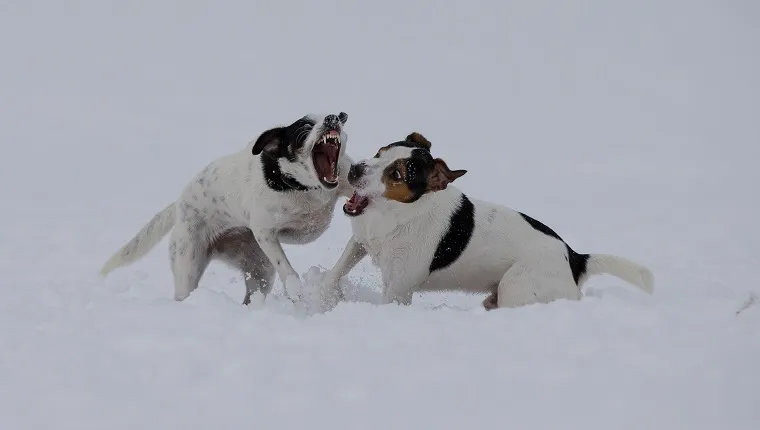
Nature and nurture each play a role in shaping your pup’s personality.
True, certain types of dogs were, historically, bred specifically to fight other dogs. However, since most modern countries have outlawed dog blood sports, breeders have mostly bred aggressive traits out of their dogs.
Breeds once born and raised for aggression now often make great lapdogs and family companions.
Even if a particular breed was created with aggressive traits, the right training and socialization — environmental factors — can and do triumph over genetics. Similarly, breeds known to be gentle and easygoing can become highly aggressive if mistreated.
If you’ve brought home a puppy, you’re in a good spot: their behavior is yours to shape. If you have an older dog and you suspect they may be dog-aggressive, training — or rather, retraining — will be much trickier.
In such cases, consulting a professional is always the best path.
How To Treat Dog Aggression Toward Other Dogs
Most behaviorists use desensitization to treat dog-to-dog aggression. With professional guidance using plenty of positive reinforcement, you can gradually decrease the physical distance between your dog and other dogs without raising their anxiety level.
This takes a great deal of time and patience — often several months to a year — but ultimately your dog will associate the approach of other canines with good things like praise, treats, and attention. Get guidance from a behaviorist before beginning desensitization.
In the meantime, don’t increase your dog’s stress by physically punishing or yelling at them, and forget prong or choke collars. Added pain and stress will only escalate your dog’s anxiety and increase the aggression.
The last thing you want to teach them is that the presence of other dogs means bad things happen.
How To Prevent Dog-To-Dog Aggression
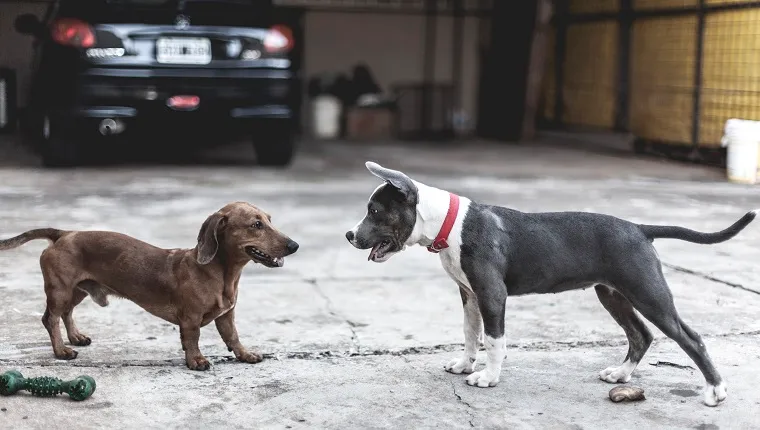
There’s no surefire way to prevent aggression, but there are basic steps you can take to greatly decrease the chances your dog will develop a problem:
- Socialize your puppy. Arrange supervised play dates with other pups, and encourage interaction with well-mannered adult dogs who can teach your puppy how to behave.
- Neuter or spay your dog as early as your vet recommends is safely possible; this will greatly reduce hormone-driven aggression.
- Always treat your dog with kindness and respect, using positive reinforcement to train. Physical correction, intimidation, and isolation only encourage aggression by adding to a dog’s anxiety.
Dog aggression toward other dogs is treatable but nearly always requires the help of a trained professional and lifelong vigilance. Doing everything you can to prevent incidences in the first place may be a better option as you continue training.
Have you ever trained an aggressive dog to remain calm around other dogs? Got any training tips? Let us know in the comments below!
More information about dog aggression: