This article courtesy of StubbyDog.org.
If breed-discriminatory legislation is not the answer, then what is? Perhaps the most shining example of a successful and adaptive set of breed-neutral policies can be found in Calgary, Canada. Their approach includes education and prevention, with a constant focus on owner responsibility – all paid for through licensing fees.
Here, StubbyDog chats with Bill Bruce, director of animal and bylaw services for the City of Calgary, about how the city’s dog policies work to create a safer and happier community for dogs and people alike.
Q: Calgary is often cited as an example of a city with successful breed-neutral dog laws. Were breed-discriminatory laws ever considered? How did the city come to adopt its current regulations?
A: After a great deal of careful consideration and consultation with our community canine experts, we came to a simple conclusion – the issue of canine aggression had to be taken seriously but had to be addressed against all dogs that display aggressive behaviors rather than selecting a few breeds whether or not they had been involved in any display of aggression. We keep up-to-date statistics on all activities around animals and found that the typical banned breeds were not necessarily the top biters. So, armed with this knowledge and the support of our community animal experts, we set out to address canine aggression from the standpoint of the act, regardless of the breed.
Q: How were the new regulations different than what the city had in place prior? Can you tell us some of the key aspects of the current regulations?
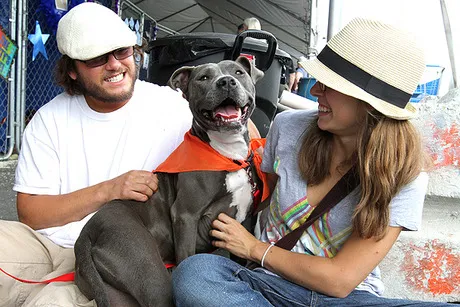
A: Initially, we treated a bite as a bite, regardless of the severity. We also had a policy of not adopting out any Pit Bull type dogs. We revamped our bites to three levels: minor, serious and attack, with increasing consequences. This was based on our understanding of aggressive behaviors escalating if they are not corrected quickly.
We also started paying closer attention to situations that lead to more serious issues, such as dogs that are at large too often or have started displaying chasing and threatening behavior. We implemented a provision in our law to declare these dogs on their way to becoming a problem as a nuisance in the community. This order increased the license fee to $100 per year and automatically doubled any fines. Our behaviorist assessed the animal if it was involved in aggressive behavior and determined the actions needed to address the problem. The nuisance order can direct the owner to take the measure of containing the dog appropriately or even order them to take training from a certified trainer to correct the dog’s behavioral issues. After one year, if there are no further issues with the dog in the community, the order is lifted. About 90 percent of our orders are lifted after one year because the dog has ceased being a concern in the community.
Q: I hear that public safety and education are part of your overall strategy. Can you tell StubbyDog readers about these programs?
A: It starts with in-school training at an early age. We teach children about bite prevention and humane animal treatment. We also offer the bite prevention training to service providers like postal workers and meter readers. As mentioned in the previous question, we work directly with owners of dogs that are showing aggressive behavior to support them in getting professional help to correct their dog’s behavior. Our philosophy is that aggression is a human problem with respect to managing their dog more than it is a canine issue, and if we address the human side, the canine problem will take care of itself.
Q: When did the new regulations go into effect, and have you noticed a decrease in bites and other issues?
A: The whole process has been more of an evolution than one big “ah ha” moment. The major change in regulation came about in 2006. The downward trend [in bites] increased. In 2008 we added more behavior science into the incidents we investigated and offered more solutions at the early chase-threat and low-contact situations. As a result, in 2009 there was a drop in our bite rate to less than six bites per 100,000 people. In 2010 we had a surprising increase in in-home bites that pushed our bite rate up to just under 10 bites per 100,000 people. We have been working hard on that aspect, and so far this year we are experiencing about a 25 percent reduction in incidents since last year. (Calgary is a city of 1.1 million.)
This year, we are amending our legislation to mirror Ian Dunbar’s six level scale of canine aggression. We have found this useful in assessing and describing the severity of an incident as well as the opportunities to intervene before it gets more serious.
Q: In your opinion, how is Calgary’s approach more effective than breed-discriminatory laws?
A: I think it has been effective because it deals with the very core of the issue: unacceptable aggressive behavior. All dogs can bite and knowing the core of the issue is with the human side of the relationship, we believed that banning a breed would not reduce the bite rate because the human would simply select another bred that was not banned and create the same problem in the community – just with a different breed. We knew if we could change the human behavior then the canine side would correct itself. It really comes down to making the statement that any type of aggressive behavior will not be tolerated, and there will be significant consequences to the dog owner.
Q: I read that when a bite occurs, investigators try to find out why. What types of circumstances do you find are most likely to lead to bites?
A: We conduct extensive assessments on the dog and its situation. We look at everything from why they have a dog to socialization, training, experience with dogs, medical history, home situation (children, other animals), how are behaviors being corrected, exercise, any observed resource guarding issues and so on. Basically everything we can learn about the dog. We will do a standard behavior assessment to look at what triggers may be there and how the dog reacts to different situations. Invariably, it almost always comes back to something on the human side of the relationship. Perhaps they didn’t provide the proper training, socialization and exercise for their dog, or they failed to notice some of the early indicators that things are going wrong, such as chasing/threatening behaviors or resource guarding.
Q: I also read that while bites have gone down, the number of Pit Bulls in Calgary actually has risen. Is this true?
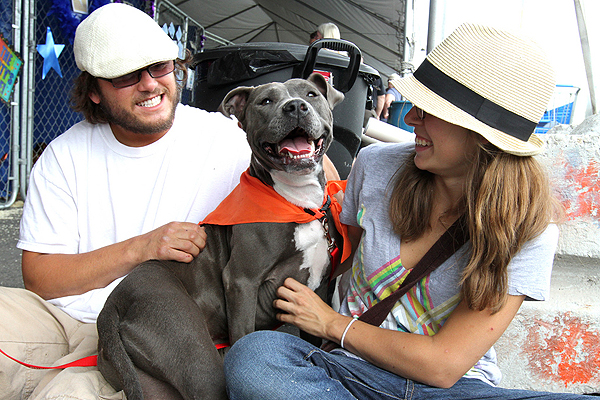
A: Yes, our number of Pit Bulls has increased probably due to the breed-neutral policies, and we have had many responsible owners choose Calgary as their home because they could keep their dog here. I would not be honest if I didn’t tell you that some that have moved here were not responsible owners with healthy, well-socialized dogs and have suffered some consequences as a result.
Q: In your opinion, do you think Calgary’s model is workable for most American cities?
A: Absolutely. The system works on supporting responsible owners and having consequences for owners who do not manage their dog in the community. The whole responsible pet ownership (or guardianship if you prefer that term) is based on four simple things we ask of all humans who have companion animals:
1. Provide a license and permanent ID on your pet.
2. Spay and neuter (unless you are a qualified breeder).
3. Provide the proper training, socialization, medical care, diet, exercise and grooming to keep your companion happy and comfortable.
4. Don’t let your pet become a threat or a nuisance in the community.
By supporting and, when necessary, enforcing these principles, we are able to maintain a safe community for people and animals with no breed restrictions or arbitrary pet limits.