7 hard-learned lessons about animal shelters, euthanasia, and the No Kill movement

My 5th lesson: There are no responsible breeders

Monday June 6th, 2011

Max_400_chihuahua
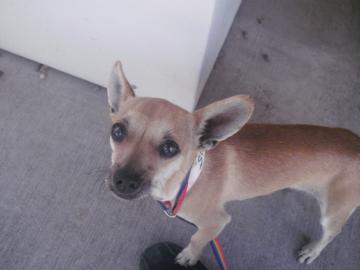
Chantilly, a beautiful Chihuahua is available at the Espanola Valley Humane Society in New Mexico.

by Leslie Smith, DogTime editor

March, 2011

Last week a tiny Chihuahua was left in the “after hours drop box” at our shelter. Many people are appalled that such thing as a drop box even exists, but our staff assures them it’s essential. For example, when a stray is found in the middle of the night, a person can leave the animal in the drop box, knowing he’ll be brought inside first thing in the morning.

The drop box, really more like a tiny closet, is heated in the winter with a bowl of water and a toy inside. About three times a week, a dog or cat is waiting there in the morning when the first staff member arrives. It’s impossible to know whether the animal’s been there an hour or five hours or twelve hours.

There are other, more critical reasons for the drop box, but we don’t advertise them. Like the fact that it reduces the number of animals who are simply discarded somewhere. The drop box saves owners from having to pay a relinquish fee and shields them from what they think will be the scorn or judgment of an in-person surrender. Sadly, some people are more likely to abandon an animal than to face the possibility of disapproval.

So while the idea of it breaks my heart, I’m grateful that we (and other shelters) provide a drop box. I feel much worse for the animal abandoned on the highway median. Or for the dog left tied up in the back yard when his owner is evicted. And for the kittens collected in a rubber-banded pillowcase and deposited on the snowy shelter steps in the middle of January.

Why DogTime lists “kill” shelters

Open-admissions shelters (see sidebar) exist for one or both of two reasons:

  1. There are not enough homes in a particular area willing or wanting to adopt animals in need.
  2. There are not enough effective shelter administrators or human or financial resources in these areas to match up would-be owners with homeless animals.

Either way, this is not the fault of the animal. So it’s our obligation, to try every way we can, to find homes for these dogs and cats (birds, ferrets, rabbits, etc.). And yes, in some cases, this assistance is to the benefit of substandard shelters.

As frustrating as that fact is, it is not our goal to put open admissions shelters out of business. (We need open-admissions shelters to ensure all animals have a safe place to go should their owners no longer be able — or want — to care for them.)

As for breeders…

So with that logic, why doesn’t DogTime list breeders? Don’t those animals also deserve a happy home?

Indeed, they do. The difference is, breeders are actively adding to the number of animals in need of homes. Not only that, they’re profiting from the venture. While we are still euthanizing millions of dogs and cats each year, there is no reason to increase the companion animal population. And there’s no reason to help breeders stay in business.

Even responsible breeders who genuinely love and want the best for their animals you ask? I know this statement will raise some hackles, but it needs to be said: There are no responsible breeders. At least not now, while our shelters are full and perfectly adoptable animals are dying (some of which came from breeders).

It doesn’t matter that you’ve grown up with Collies or that a German Shepherd once saved your life. I don’t care what breed you love above all others. Your passion for wanting to see that breed proliferate is irrelevant when it comes to the welfare of a single animal. Breeding is a hobby for humans. It’s morally intolerable to value the worth of a breed over the worth of an individual. No exceptions.

Pit Bulls are my favorite kind of dog. I see one on the street and I have to fight the urge to race over and nuzzle him. I look at a Pit Bull’s photo and I burst into tears at her beauty. But I’d rather see the breed go extinct than for one more to be euthanized in the name of pet overpopulation.

Next installment: We can’t continue to rely on adoption any more than we can kill our way to No Kill

This just in: Check out the writer's response to readers' comments.

Around the Web
lovablek9s

Thank you, B.I. for summarizing what is really going on here. To respond to some other comments .... The objective here is not to stop all dogs from reproducing which is why they will not be extinct. We are asking breeders to hault what they do until the overpopulation problem is under control. Who knows how long that will take? Are responsible parents taking care of kids from irresponsible people? Yes ... have you not heard of welfare checks that are available to those who cannot afford their kids .... who do you think pays for this .. You do! But, that is another topic ... please stay focused on this problem. Please offer constructive ideas that will benefit the homeless pets out there. Education is important in that each person needs to do their part and encourage others to be responsible. Compassionate people should want to help end the needless suffering and senseless killing. Let's work together!

almost 2 years ago by lovablek9s

nicoledz66

Wow; I really disagree with the "there are no responsible breeders" statement. I have been involved with dogs for over 36 years and over those many years I have met thousands of pet owners. I know many breeders as well and perhaps 20% I would consider to be "responsible breeders." I find it appauling when an animal advocate takes the stance of "only adopt." Rescuing is wonderful; so is finding a responsible breeder and adding and caring for a new puppy. Let's point the finger at the real problem; the Millers. I know so many great breeders who spend hours of time rescuing, rehabilitating and placing dogs in need. Shame on you to put them all in one horrible bag. There is a huge difference and people need to see that.

almost 2 years ago by nicoledz66

melissa.abbotts

I agree, I was so shocked at the overwhelming number of pure bred dogs at kill shelters and the breeders who obviously sold them to irresponsible callous owners. It has always been shocking to me to see dogs treated as a commodity and a status symbol instead of being nurtured and properly socialized with a human being. The only pure bred I ever bought was from a co- worker who bred a littler of puppies with her two dogs. I adopted a second in a high kill shelter who was only used for stud and had been abused by a "reputable" breeder. If there was no money involved few breeders would do what they do. Period. Doesn't take a rocket scientist to see that. Want a pure bred dog, go to a shelter and save one who has been abandoned.

almost 2 years ago by melissa.abbotts

Wendy

In my opinion to say there are no responsible breeders is completely asinine. Your (the article's author) opinion is everyone should adopt from a shelter and all dog breeding should be halted and all dogs should be spayed or neutered...hence no more purebreed dogs which eventually leads to no more mixed breed dogs which in turn leads to no more dogs period. This would be the case if what extreme animal activists got their way and as I see it this sight is now spewing extremism. To say no one has a right to want or own a purebreed dog is outrageous. There is nothing wrong with buying a dog from a responsible breeder, which I think we all know what a true responsible breeder entailsso I won't go into details. There is nothing wrong with wanting to know your dogs parents, what size it will be, general breed specific temperment and behavior. If you have children you may want a breed that is great with kids or if you want to feel safe you may want a dog that makes a good watch or protection dog. Or perhaps you or a family member love dogs but want a low shedding dog or need one that is less likely to cause an allergic reaction or perform a specific job such as herding sheep or cattle or protecting sheep, etc... I am well aware that mutts and shelter dogs are capable of many great things but you do not always know what you are going to get...there are no health or temperment guarantees, there is not always a behavior history or a history of what was done to the dog as far as abuse or neglect. Sometimes the behavior that past abuse or improper training or socialization does not surface for awhile after a dog is rescued/adopted, this includes the purebreeds in rescue as well as mixed breeds.I have and have had both purebreed dogs and a rescue dogs. I rescued, retrained and rehomed dogs.

about 2 years ago by Wendy

Recent conversations on these topics

  • What my conscience says as an amateur breeder.

    Greetings from Greece. Iam not here to advertise or to show off for my actions but this what my conscience said to me.... I am an amateur breeder,desperate in need for money due to the crises in my country,however,I haven't bred my show quality bitches for one more time because I haven't had at least five deposits well in advance for five of the future puppies. Surely one of the reasons is that I wouldn't be able to afford keeping more dogs at the moment but I would never ever risk the future of a puppy to somebody who would take one for free or a very small amount of money just because he found the chance of a breeder under "pressure".Moreover,I would never give any of my puppies to a pet-shop or a "dog - trader". I keep in touch with the ones who bought a puppy from me in the past and I am really delighted each time I hear that they have a happy life with them.Even happier when I meet some of them and I see it myself. Breeding should be a professional job only in matters of quality.If you totally rely on it for survival it could and up in a disaster for you and your animals. Am I wrong?

  • Whether or not dog breeders are irresponsible is irrelevant

    what is relevant is irresponsible pet owners allowing the numbers of unwanted pets to grow. I think it has little to do with breeders and a lot to do with societies throw away attitude when it comes to everything, including their pets.

No-kill, kill, open-admissions, and limited-admissions shelters — what's the difference?

Within the No Kill movement, people classify shelters as either “kill” or “no-kill.”  The first term refers to shelters that euthanize animals largely because they don’t have the space to house them all; more dogs and cats are brought in to the shelter than get adopted out. The second term refers to shelters that euthanize only when the most extreme behavior issues are manifest or when an animal is suffering without hope.

Others prefer to classify shelters as either “open admissions” or “limited admissions.” The first refers to shelters who will take in any animal, regardless of behavioral issues or health conditions. The second refers to shelters that only take in certain animals (usually those they deem most adoptable) and therefore do not euthanize animals.

I used to think these were two sets of nomenclature to describe the same thing. A kill shelter meant you were open admission: You took in any animal that arrived on the doorstep, even if it meant eventually euthanizing him. A no-kill shelter meant you limited your admissions: You turned away certain animals, but you never needed to euthanize due to space limitation.

Before I started writing this piece, I was adamantly opposed to the terms kill and no-kill. It seemed limited admissions and open admissions much more accurately and fairly described the types of policies. After all, wasn’t turning away an animal in need on par with euthanization? But here’s what I’ve learned: The terms kill and no-kill are not interchangeable with the terms open admissions and limited admissions. The No Kill movement says shelters can be both open admissions and no kill — "all" you need are competent, forward-thinking administrators.

That said, the vast majority of the nation’s self-described “no kill” shelters are indeed “limited admission.” And since refusing to admit an animal guarantees no better a fate for him than could an open admissions shelter, I will use the term “open admission shelter” instead of “kill shelter” for the remainder of this article.

So, while No Kill is completely appropriate for the name of movement, it’s not altogether fair as a label for a shelter.  I don’t have a good solution as to how these two types of shelters should be differentiated — my hope is that one day we won’t need to: All shelters will be open admissions and no kill. 

Royal_canin_promo_banner_labretriever

Welcome to DogTime.com

DOGTIME LOGIN or SIGN UP

close