Ad
Ad

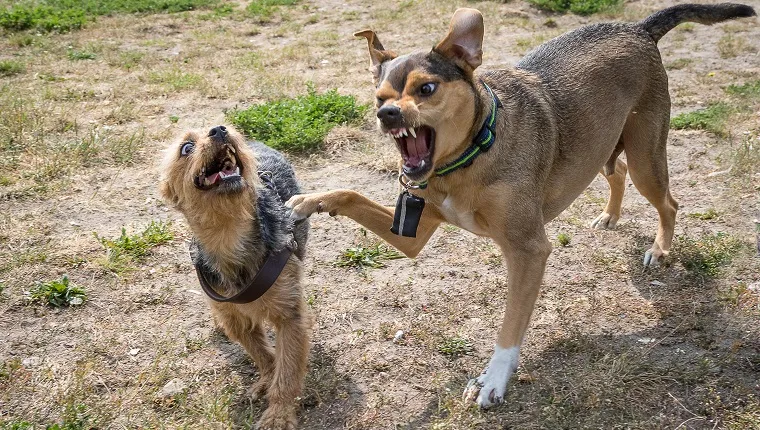
Newly aggressive toward dogs!

QUESTION: Why is my dog suddenly aggressive toward other dogs?

answered by Nicole Wilde

ANSWER: Without meeting your dog, it's impossible to know for sure. That said, here are some of the most common reasons dogs begin to show aggression toward other dogs:

1. The dog is coming into adolescence. Adolescent dogs are little fur-covered containers of raging hormones. Even if the dog is spayed or neutered, the body--and temperament--is changing. The dog who formerly ran in fright from other dogs might now take the offense. And many dogs who are genetically predisposed to aggression begin showing the signs at this time. Whatever the cause, aggression often manifests between the ages of six months and eighteen months. Intact male dogs are the most likely to show adolescent-onset aggression, particularly toward other intact males.

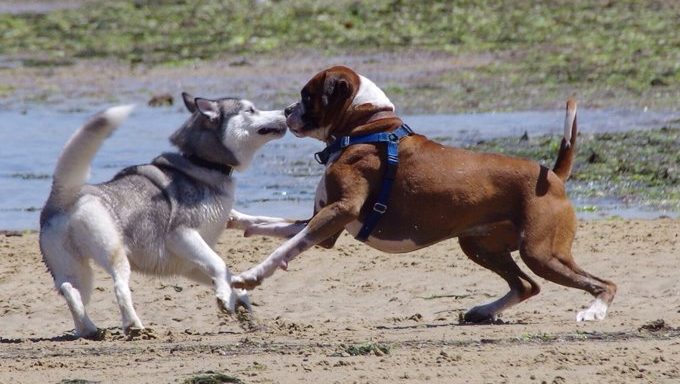
2. Your dog has not been socialized enough. Even if you have more than one at home, this doesn't guarantee he won't display aggression toward unfamiliar dogs. And because each breed has a specific play approach, a new dog's style may be very different from what your dog is used to. That alien body language could cause confusion--and potential aggression--if he feels threatened.

3. Your dog had a traumatic experience. Let's say your dog loves other dogs, but one day at the park, another dog attacks him. Now your dog may be on the offense when he attends the park, thinking other dogs mean him harm.

4. Something is physically or medically ailing your dog. This is commonly seen in older dogs with conditions such as hip dysplasia or arthritis; these dogs just don't appreciate the body slams of enthusiastic younger pups. But illness or physical issues can strike dogs of any age. If your dog is feeling unwell for whatever reason, aggression may be a symptom. Any time your dog shows sudden-onset aggression, a veterinary checkup is in order.

The best course of action is to address this problem before it worsens, as aggression issues tend to escalate if left untreated. Use the services of a professional trainer who uses positive reinforcement methods. Get a recommendation from someone who has used the trainer before, ask your veterinarian, or check The Association of Pet Dog Trainers' web site (www.apdt.com) to find one in your area.


Nicole Wilde is a Los Angeles–based Certified Pet Dog Trainer specializing in behavior issues, and is the owner of Gentle Guidance Dog Training and the author of several books, including Help for Your Fearful Dog.

Read more about Nicole Wilde in the DogTime expert center...

Ad

Comments

5. It could be a combination of classical conditioning and boundary frustration.

I've noticed an error some many folks make in their attempts to socialise their dogs, is backfiring on them.

If your dog has come to expect to meet and greet every dog (or person) they see (through classical conditioning - which is associative), and then is suddenly stopped from what they have inadvertantly been conditioned to expect, they can react with frustration with the new boundary.

Teaching your dog to accept the boundary of the leash and ignore strangers and strange dogs from an early age, can be invaluable.

This doesn't mean they must ignore everyone at all times. It simply means the dog is taught to follow your direction and accept the boundary of the leash when you direct him to do so. And, greet other dogs and humans - when you direct him to do so.

6. The dog has social problems do to lack of leadership and has become unstable.

Your dog does what it wants, when it wants, or may even be a bully...with you reacting to what your dog is doing, rather than the other way around.

Although fear is a factor in both humans or dogs who display anti-social behavior, don't be convinced by anyone that your dog is "reacting in fear" if he is making the choice to be aggressive (fight) towards another dog who is not already in his space, rather than back down and move away (flight), or ignore because you have directed him to.

I recommend finding someone through the International Association of Canine Professionals (www.dogpro.org/) who incorporates a leadership (social) philosophy in addition to any training or counterconditioning methods they may also use.
— chasorg, Jul 10 2008

Add a comment


newest topics:

Behavior

See ALL topics in this forum

Subscribe to Behavior 103 topics, 474 posts
topics replies views last post
8-10 Mo. Old German Shepherd - Never heard him bark!

Sarge is a stray from our local shelter so we don't know anything about him. He is one of the most well-adjusted GS's I've been around. H... (continued)

1 275 7 hours ago by pcarpenter
view
What kind of crate should I use?

We recently transitioned our 4 month old German Shepherd from a smaller plastic crate to a larger wire one (we also use the divider). He o... (continued)

0 79 2 days ago by dawnmarie727
view
Husky dominance problem

I own a 4 year old, female Siberian Husky. She has been our only dog for the past 4 years. We are looking at adopting a 3 year old, male... (continued)

0 110 Nov 29, 2008 11:21am by powerofgodro...
view
Posessive 8 male Month old Cavalier King Charles

We have just brought home a male 8 month old CKCS. We believe that he with with a famiy of 4 children and was pulled about and mistreated ... (continued)

0 257 Nov 21, 2008 4:26am by jennybarlow1
view