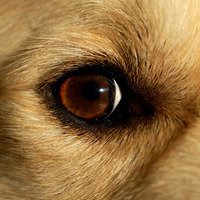
Cataracts are one of the most common eye problems affecting dogs, and are found in all ages and breeds. Some breeds, such as Cockers, Poodles, Miniature Schnauzers, and Terriers, seem to get more cataracts than other breeds.
The eye has a transparent lens over it, which focuses beams of light onto the retina so your dog can see clearly. A cataract is a disruption of the lens fibers that interfere with sight by partially or completely blocking the clarity of the lens. A small cataract will usually not significantly interfere with your dog’s vision, but if the cataract becomes large or dense enough, your dog could go blind.
Cataracts can be hereditary, or the result of old age. Genetics are the most common cause of cataracts; they may be present at birth or grow when your dog is very young. Injury or an illness, such as diabetes, can also be a factor in a dog developing cataracts. If your dog’s cataracts are due to illness, treating the disease may diminish the cataracts.
Note: Don’t immediately assume your dog has cataracts if you see his eyes begin to turn gray. It may just be a thickening of the clear lens, a natural part of aging. This condition is called nuclear sclerosis and typically appears in dogs as they near six years of age; it seldom affects their vision, and does not require treatment.
Treatment for dog cataracts
There is no effective treatment for cataracts other than surgery. While cataracts are not painful, they can cause your dog to lose his sight. Surgery can restore a dog’s sight to near normal. A veterinary ophthalmologist removes the lens and replaces it with a plastic or acrylic prosthetic lens to allow for more focused vision. The success rate for cataract surgery is 90 to 95 percent, but it’s a delicate procedure and it requires extensive postoperative care by the dog’s owner.
Your dog will have to wear a protective collar (Elizabethan Collar) until his eye heals, and you will need to keep him quiet and calm. He will also require eye drops several times a day for a few weeks.
Talk to your veterinarian if you think your dog’s cataracts are affecting his vision enough to warrant surgery. He or she is the one to provide any additional information your may need and address any concerns you have.
Source: Adapted from the American Animal Hospital Association
For additional information, see our Dog Cataracts health topic.
Search our local listings for a veterinarian in your area.