There’s no doubt about it — ticks are nasty little bugs. Any creature that attaches itself to skin and sucks blood is high on the list of things you want to avoid. Worse yet, ticks present a health risk for both dogs and humans.
They can feed on hosts’ blood for a few hours or a few weeks — yuck — then drop off to lay thousands of eggs. Different ticks have distinct lifestyles that influence when they’re most active. Most present a higher risk during warmer months, but they’re a year-round threat in many places.
Beyond their natural gross-out factor, the main problem with ticks is that they can transmit a number of diseases, including Rocky Mountain spotted fever, Lyme disease, and — in the case of the female wood tick — something called tick paralysis.
As May is Lyme Disease Awareness Month, now is a good time to also go over some tips for keeping Lyme-carrying ticks off your dog. Here’s what you can do to treat your dog for ticks, when you should see a vet, and how to prevent tick bites in the future.
Home Treatments For Ticks On Dogs
Examine your dog each time you return from a walk in the woods or a field. Ticks like to settle between the toes, around the face and ears, and in the armpits or groin area on dogs, although they can latch on just about anywhere.
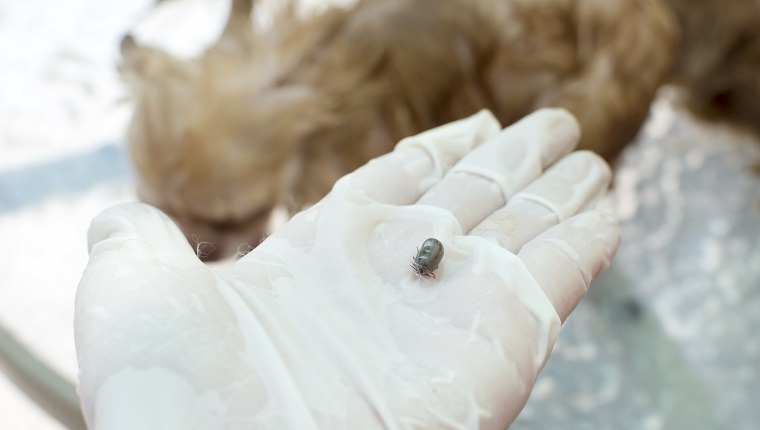
Ticks may start out as very small, black dots, about the size of the head of a pin; or they can be larger and more easily seen, about half the size of a ladybug. When engorged with blood, the tick’s body swells, and it holds firmly to a dog’s skin.
Unfortunately, it’s often easiest to find a tick when it has already latched on. By feeling your dog’s skin, you can find a tiny lump that feels much like a small burr, except you can’t brush or pull it off easily.
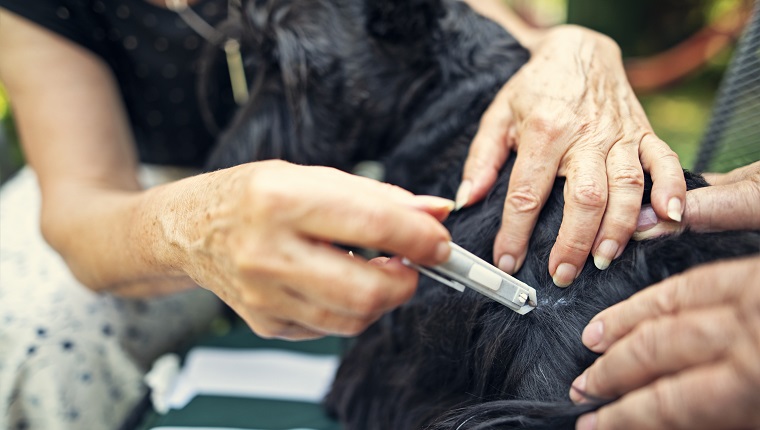
If you find a tick, you can remove it with a pair of tweezers or tick removal tool.
Because the blood of a tick can be dangerous, don’t crush it between your fingers. Also, flushing it down the toilet will not kill it.
Putting it in rubbing alcohol will do the job. It’s best to wear rubber or surgical gloves when you handle ticks.
If the tick has already burrowed its head into your dog’s skin, use a pair of tweezers or a tool and gently grasp the tick by the head, not the body. Pull straight outward — though occasionally vets recommend twisting clockwise. Dip the tick in rubbing alcohol.
If the head remains in the skin, you may be able to remove it with the tweezers. If not, it will likely come out on its own, but you should check with your vet for advice on whether to try to remove it or simply leave it and watch for signs of infection.
You may wish to keep the dead tick in a container, just in case your vet asks you to bring it in for further testing.
When your dog has had ticks, particularly a severe infestation, you’ll need to thoroughly clean their bedding area. Luckily, ticks, unlike fleas, usually don’t spread beyond the dog or their bed; although, they do present an obvious danger to other animals and people in the house.
When It’s Time To See A Vet
Sometimes tick infestations become severe, with hundreds of ticks on the dog’s body. When this happens, the dog must be treated with an insecticide dip and may require multiple treatments to completely eradicate the ticks.
This most often happens with homeless dogs who live outside or dogs who suffer from neglect. When these infestations are particularly severe, dogs can suffer from heavy blood loss.
Extreme infestations can also happen to dogs who enter heavily tick-infested areas. If your dog has a severe infestation, you should go to your vet for help right away.
Other reasons to see a vet:
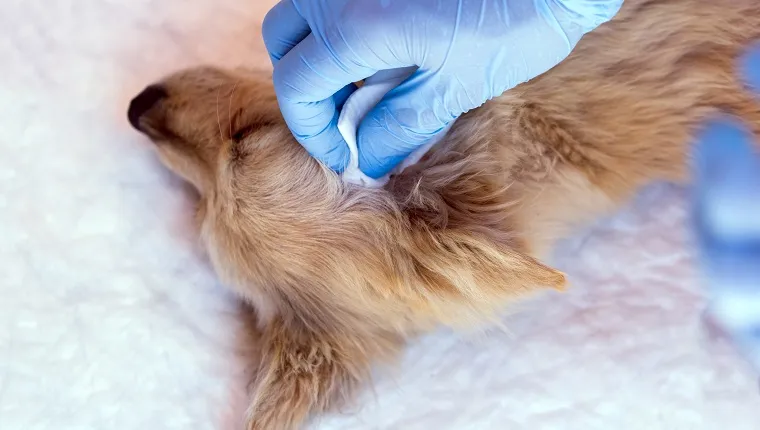
- One or more ticks can be seen deep in the ear canal.
- Redness or swelling at the site of the tick bite that lasts beyond two or three days after removal.
- Your dog’s behavior or health changes after a tick bite.
- You see symptoms of tick-borne illnesses, such as Rocky Mountain spotted fever, Lyme disease, or tularemia.
Even if you don’t see these signs, it can’t hurt to call your vet after a tick bite, just to be safe. Your vet may want you to bring in the tick after you’ve removed and killed it. This may help your vet run tests if they find it necessary.
How To Prevent Ticks On Dogs

If you use a wide-tooth comb for fleas on your dog after a walk, chances are you’ll discover any ticks in the dog’s coat, too, and they’ll probably not have attached themselves yet.
To protect yourself, tuck long pants into your socks during walks in woods and fields, and wear a hat.
Around your house, be sure to keep tall grass mowed to discourage ticks from setting up camp in your yard. Pet-approved insecticides may be used on your lawn to control ticks, but their benefits may be short-lived since some ticks spend part of their lifecycle underground, safely away from any treatment.
There are many treatments available to help keep your dog safe from ticks:
Topical Treatments For Ticks
These products are commonly used and are very effective. You apply a small bottle of solution to the back of the dog — directions vary, as does the dosage based on the dog’s weight. They usually last for a month or so.
Some will also kill fleas, but not all, so read the label carefully. Frontline and Advantix are popular brands. Active ingredients can include permethrin, imidacloprid, pyrethrin, or fipronil.
Some dogs experience serious side effects with these treatments, and many dog parents fear that these medications are toxic and will harm their dogs. If you have these fears, talk to your veterinarian about alternatives that have fewer side effects.
Sprays
A bit more work, tick sprays require that you cover all areas of the body. Be careful around eyes and ears; it’s best to spray a cotton ball and dab the solution around those areas.
How long the sprays remain effective varies, so read the label, and be sure to spray in a well-ventilated area. Active ingredients can include pyrethrin or permethrin.
Powders
These are easier than sprays but messy, to be sure. They’re not recommended for dogs who suffer from asthma.
Again, read the directions carefully for how to apply and how long the tick powder remains effective. These can contain pyrethrin.
Shampoos And Dips
Shampoos and dips may have some residual benefit, but are most often used for a dog already infested with ticks. Work up a good lather across the entire body, and leave it on for at least ten minutes.
To protect your dog, avoid getting it in their ears, and be very careful around the eyes. These can contain pyrethrin.
Collars
Tick collars can be effective, but they may not be useful for a dog who likes to swim, as they become less effective after getting wet. Read directions carefully to see how long the collar remains active.
When fitting the collar, make sure it’s snug but with enough room to get two fingers between it and your pet’s neck. These typically contain carbamates and pyrethroids.
Some dogs have an adverse reaction to the collar, so it’s a good idea to ask your vet about it and watch your dog carefully when you first use it. Also, the collar isn’t effective at killing fleas.
No matter what method you decide to use to protect your dog from ticks, talk to your vet, first. They can help you make an informed decision about appropriate treatments.
How do you protect your dog from ticks? Do you have any particularly effective methods? Let us know in the comments below!
Discover more from DogTime
Subscribe to get the latest posts sent to your email.