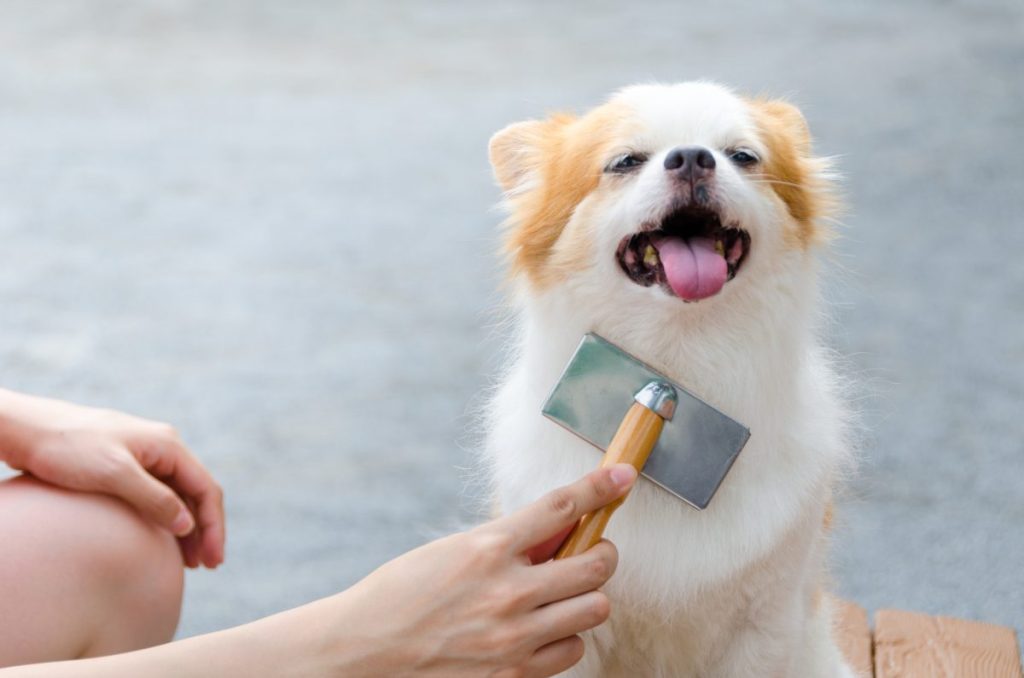
Although dogs do some things to keep their coats neat and clean on their own, they need your help with tasks that require opposable thumbs, such as brushing.
Regular brushing removes excess hair from your dog’s coat and cuts down significantly on the amount of hair you have to deal with on your furniture, car, and your favorite black pants. It also helps distribute the natural oils in your dog’s fur and skin, keeping their coat healthy and looking its best.
Brushing is also a great way to check your dog’s health. While you brush, look at the condition of your dog’s coat. Is it matted or tangled? Dry or oily? Also look for lumps, ticks, fleas, hair mats, cuts, and anything that looks unusual.
As they age, they’ll get a few more bumps and lumps all over. On the off chance one of those lumps isn’t harmless, it’s better to discover it sooner rather than later.
Brushing basics
Brushing really is pretty basic. You just need to understand the type of coat your dog has, and that determines how often you need to brush and what type of brush to use.
You should ask your vet or groomer for more individualized instructions. Here are some general rules for grooming:
- Long-haired breeds, such as Collies and Tibetan Terriers, need to be brushed weekly, sometimes more often if the coat seems particularly tangled. A pin brush is a good choice for these breeds because its bristles grip the undercoat and remove loose hairs without causing pain. It can also get down to the skin. Start close to the skin and brush away from it. Use a comb to tease out any mats.
- Short-coated dogs, such as Labrador Retrievers and Greyhounds, don’t need frequent brushing because their hair doesn’t mat and tangle easily. Still, you may want to brush them every couple of weeks to remove loose hair. Use a rubber brush or grooming glove, which will help bring dirt and loose hair to the surface. The gloves fit over your hands, so your dog will think you’re petting them and won’t suspect you’re actually brushing. If you prefer a conventional brush, short coats can take a stiff, natural-bristle brush or a soft slicker brush, which has little, bent-metal pins in it. Follow up with a soft-bristle brush, which helps distribute the hair’s natural oils.
- Short, wiry breeds, such as Dachshunds and most Terriers, need a slicker brush, followed by a once-over with a metal comb. Once every few days should do. A stripping knife will remove the dead hair in the undercoat. Have someone knowledgeable show you how to use one before you try. If the coat has mats, work those out first.
How to brush your dog
Now that you’ve got the right equipment and you know how often your dog needs a good brushing, make sure you’ve got the right technique.
Here are a few guidelines to help you out:
- Brush down and out, away from the dog’s skin. Always brush in the direction the coat grows. Dogs don’t like to be brushed backward.
- Be gentle or you may damage your dog’s coat by pulling hairs until they tangle and break. Take the time to untangle any snags.
- If you encounter mats, apply a coat conditioner or mat spray. Leave it on for several minutes. Then use a wide-toothed comb or a mat-splitting tool to get through the tangle. Mats can get close to a dog’s skin, and removing them can be painful, so proceed carefully. You can cut out mats with scissors, but be careful you don’t end up at the vet for stitches; it happens more often than you’d think. If you just can’t get a mat out, take your dog to a groomer who will probably shave the area.
When to go with the pros
While it’s true that you don’t need a pro to brush your dog, there’s no shame in taking your dog to a groomer. They’re in the business for good reason!
You know how you can never get your hair to look as good as your stylist does? Well, the same is true for your dog.
Besides, some level of skill is called for if your dog’s coat tends to get matted. And if your dog really doesn’t enjoy their beauty routine, you’ll find that experienced groomers are good at sweet-talking even the most scaredy-cat dog into relaxing.
Brushing is an essential part of a good grooming routine and will help keep your dog’s coat healthy and looking good. It’s easy to do yourself, but you’ll need a few tools and techniques to do the job right.