When my dog, Cardiff, first got sick, I didn’t anticipate that he was afflicted with one of the most severe, often fatal, illness seen in veterinary practice. Yes, my dog has Immune Mediated Hemolytic Anemia (IMHA) and survived three hemolytic episodes in his five years of life. Unfortunately, IMHA is a disease requiring significant time, effort, and financial resources to treat. Being my dog’s veterinarian, I am fortunate to have access to laboratory resources, treatment facilities, and experienced specialists to guide me through the diagnostic and management process.
Cardiff is a Welsh Terrier with breeding origins in Washington state. I really love the breed, and was anticipating the possibility he may develop other, more common, illness related to his breed (Hypothyroidism, Seizure Disorder, Atopic Dermatitis, other). Actually, Cardiff was a gift “to us” from an ex significant other who, surprised me with this 3-month old, brown and black ball of fur who has shaped my veterinary practice and outlook on life.
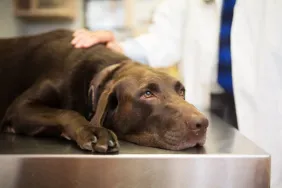
Fortunately, Cardiff was not sick from the start. He was remarkably healthy through his puppyhood and his illness had a rapid onset at two and a half years of age. My normally vigorous buddy suddenly became very lethargic, had pale gums, started breathing at a faster rate, produced dark yellow urine, and exhibited a decreased appetite.
My first thought was that Cardiff had contracted Leptospirosis, as he had spent time the previous summer in Washington and could have been exposed to the nasty spirochete bacteria through water contaminated with feces or urine from a wild animal. As the internal medicine specialist with whom I work guided me through the extensive diagnostic workup (blood and urine testing, urinalysis, xrays, and ultrasound), the diagnosis of primary IMHA was ultimately reached. I was concerned that I would not have the companionship of my buddy when he was a senior dog, but he overcame adversity and gradually returned to his energetic self.
After having knocked Cardiff’s IMHA into remission twice before, experience gave me a sense of confidence in treating his third episode at the end of 2009. At the same time, I was frustrated that Cardiff was feeling unwell and had to endure the long journey back to his normal state of health. All three episodes required thorough medical workups to look for underlying causes, yet the treatments were very similar. With the most recent episode, I delved deeper into the problem from a Chinese medicine perspective and established a treatment plan based on an integration of western and eastern practice modalities.
Read part 2 of this article to learn more about Cardiff’s integrative treatment.
Dr. Mahaney graduated from the University of Pennsylvania School of Veterinary Medicine and is also a Certified Veterinary Acupuncturist. He lives and practices in Los Angeles, California, and works closely with local rescue organizations. He also writes for Los Angeles Pet Care Examiner column.