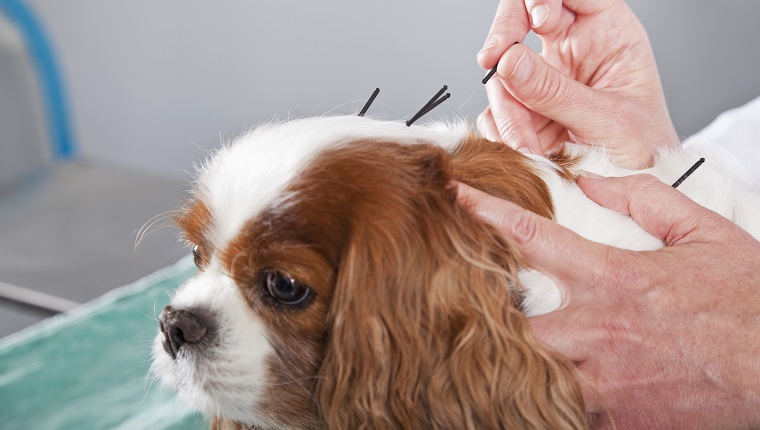
Acupuncture is a therapeutic process during which a practitioner inserts fine needles into your dog’s body to help control pain and cure chronic ailments.
It’s a very old practice in humans and in animals; something very much like acupuncture was practiced in India more than 7,000 years ago, and there is evidence that Stone Age humans in China used it 5,000 years in the past.
Acupuncture for animals is nearly as old a remedy as it is for humans. In fact, some say it was first discovered after horses were hit in certain places by arrows and exhibited “miraculous” healing.
The “father of animal acupuncture,” Shun Yang, lived 500 years before the birth of Christ, and European medical journals mention its use as long ago as the 1600s.
Modern techniques use more than simply fine, solid needles; practitioners also employ electric heat, massage, and even low-power cold lasers to stimulate acupuncture points.
How Dog Acupuncture Works
The central concept behind acupuncture — for you or your dog — is the idea of balance.
Ancient Chinese medical philosophy teaches that illness is the result of an imbalance of vital energies in the body, and acupuncture restores that balance and allows the body to heal.
It does this by guiding chi (or qi), “vital energy,” along certain pathways, commonly called meridians, in the body.
Philosophy aside, medical researches can observe changes in electrical activity and increased blood circulation during acupuncture, as well as a decrease in muscle spasms and the release of endorphins and other chemicals in the brain.
The practice has become widely accepted in the US and around the world. It even has its own professional organization, the International Veterinary Acupuncture Society, or IVAS, which offers an extensive certification program for veterinarians.
Today more than 150,000 vets and 700,000 paraveterinary assistants use acupuncture in their practices.
What Dog Acupuncture Can Treat
Research has found acupuncture effective in treating a variety of chronic and even acute conditions, including:
- Orthopedic, obstetric, and surgical pain
- Paralysis
- Noninfectious inflammation
- Allergies
- Arthritis
- Disc problems
- Gastrointestinal problems, such as vomiting and diarrhea
- Male and female reproductive problems
- Skin disease
- Incontinence
- Hearing loss
- Cardiovascular disorders
- Chronic respiratory conditions, such as asthma
- Musculoskeletal disorders
- Neurological disorders
In many cases, acupuncture is an adjunct therapy — part of a larger mix of traditional medicine that includes medications, antibiotics, surgery, and more, as well as alternative approaches that include massage, breathing exercises, nutrition, herbal medicine, and others.
It is believed to enhance the effectiveness of antibiotics or to work as a pain reliever when more standard analgesics and anti-inflammatory medications can’t be used or have proven ineffective.
When To Visit The Acupuncturist
Vets generally agree that acupuncture does offer benefits in many cases, but also that it has its own set of dangers. Probably the greatest one is misdiagnosis or lack of diagnosis of a condition that could be best addressed by a combination of therapies.
That’s why it’s important that you take all the anecdotes and advice of friends and family with a grain of salt, and start your decision-making with a trip to a trusted veterinarian.
After a thorough exam and diagnosis, you should discuss the idea of acupuncture as part of the response. Try to get a referral to an experienced acupuncturist from your vet if they aren’t trained to do it, themselves.
Sometimes acupuncture may be a first response to your dog’s health problems; in other cases it may be a last resort, after more traditional approaches have failed. Either way, you want a professional who has been properly trained and has experience in treating the specific challenges you and your pet are facing.
How An Acupuncture Session Works
Your dog’s first acupuncture treatment should begin, much like a normal visit to the vet, with a thorough physical exam.
The practitioner will look for external signs of illness — dull eyes and coat, breathing problems, discharge. They will likely ask a great many questions about your pet’s medical history, vaccinations, normal activities, home life, urination habits, diet, and attitude. They may even try to get your dog to bark.
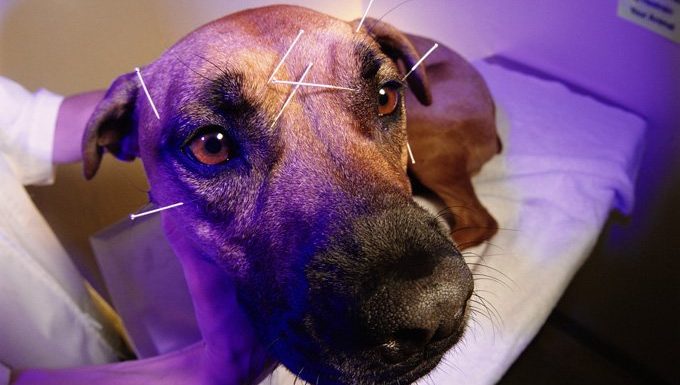
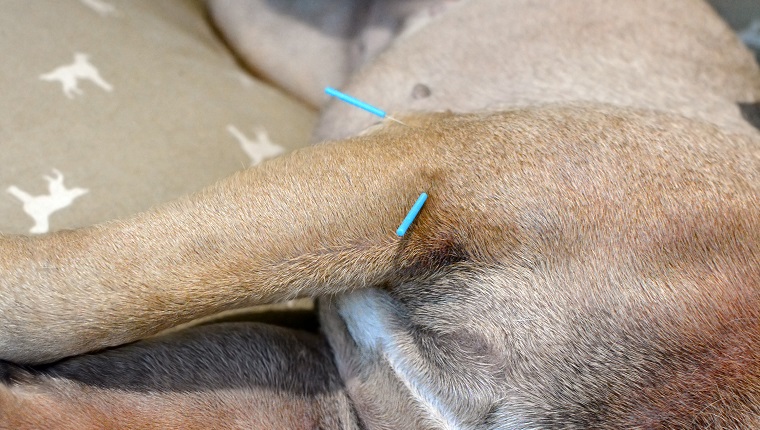
In most cases, the acupuncturist will treat the dog by inserting very thin needles along the animal’s bladder, kidney, and spleen meridians. The dog remains conscious, not under anesthesia, during the process.
The size of the needles and the exact locations of the meridians varies depending on the size of the dog and their ailment. Generally, practitioners use short needles — about half an inch long — on areas such as the head or face and use longer, one-inch needles elsewhere. In some cases, the needles may even be as long as two inches.
The needles themselves are solid but very flexible, and they should always be sterilized in advance and discarded immediately after. When a trained and experienced practitioner — the only kind who should even attempt this — performs acupuncture, it’s an extremely safe procedure, and infection does not pose a significant risk.
Does It Hurt Your Dog?
Acupuncture shouldn’t hurt your dog. The insertion, manipulation, and removal of the needles may look odd. However, in the hands of a trained practitioner, your dog shouldn’t feel any pain at all.
In fact, most animals actually become very relaxed during a treatment; they may even become sleepy and yawn. The entire session may last just a few seconds or go on for as long as 30 minutes.
Some animals appear to feel worse for a day or two afterward, but that’s not the case for all dogs, and it doesn’t signal a problem unless your dog’s health is actually deteriorating.
It’s rare for the ailment to be fully “cured” in a single session, even a long one. You should prepare for four to eight weekly or biweekly sessions; although, you may see some positive response after the first treatment, and pet parents usually notice improvements by the third.
Acupuncture shouldn’t be a lifelong commitment, even for chronic conditions like arthritis. You should see positive improvement in a matter of days or weeks. Once the problem is under control, the number and frequency of treatments should taper off.
Have you ever taken your dog for acupuncture treatments? Did they help your dog feel better? Let us know in the comments below!